
Your Essential Guide to Major Bali Festivals and Events
Bali knows how to fill a calendar. One week brings temple ceremonies and penjor-lined streets, the next brings kite fields, food festivals, art parades, literary talks or music by the coast. For travellers, Bali festivals are not just dates to tick off. They are a way to understand the island through its rituals, creativity, community and very committed sense of timing.
A little awareness goes a long way here. Understanding balinese culture helps visitors know the difference between a public celebration, a sacred ceremony and an event whose date may shift because it follows the Balinese pawukon calendar or the Saka lunar calendar.
The best approach is simple. Come curious, dress respectfully and give ceremonies the space they deserve. Bali is generous with what it shares, but it is not a backdrop. The rituals, processions and village traditions belong to living communities, and the better you understand that, the better the experience becomes.
Nyepi and the Night Before
Nyepi is Bali’s Saka New Year and one of the island’s most important days. For 24 hours, public activity stops. Roads empty, lights are kept low, businesses close and visitors must stay inside their accommodation. It is not a “slow travel” suggestion, but a rule that you must follow.
The night before Nyepi brings a very different mood. Ogoh-ogoh parades fill the streets with large demon figures, built for ritual cleansing before the island enters silence. Visitors can watch, but should follow local directions, avoid blocking processions and remember that the best view is never worth bad manners.
Galungan and Kuningan
Galungan celebrates the victory of dharma over adharma, or good over evil. It is one of Bali’s most recognisable holidays, especially because of the penjor, the tall decorated bamboo poles placed outside homes, temples and streets. Kuningan follows ten days later, marking the close of the celebration and honouring ancestral spirits.
During this period, expect families in traditional dress, temple visits, offerings and heavier traffic around ceremonial areas. Beautiful does not mean casual access. Dress modestly near temples, keep distance from prayers and avoid photographing people as if they are part of the décor.
Bali Arts Festival
The Bali Arts Festival, or Pesta Kesenian Bali, is one of the island’s major cultural showcases. Usually held in Denpasar for around a month, it brings together dance, music, theatre, costume, craft, visual art and performances from across Bali’s regencies.
For visitors, it is one of the easiest ways to see Bali’s creative range in one place. You may catch a gamelan performance, a dance competition, a craft exhibition or a regional presentation that would usually require a much longer trip around the island. Arrive early, dress comfortably and expect crowds. Cultural pride does not do small rooms.
Kites, Villages and Rural Traditions
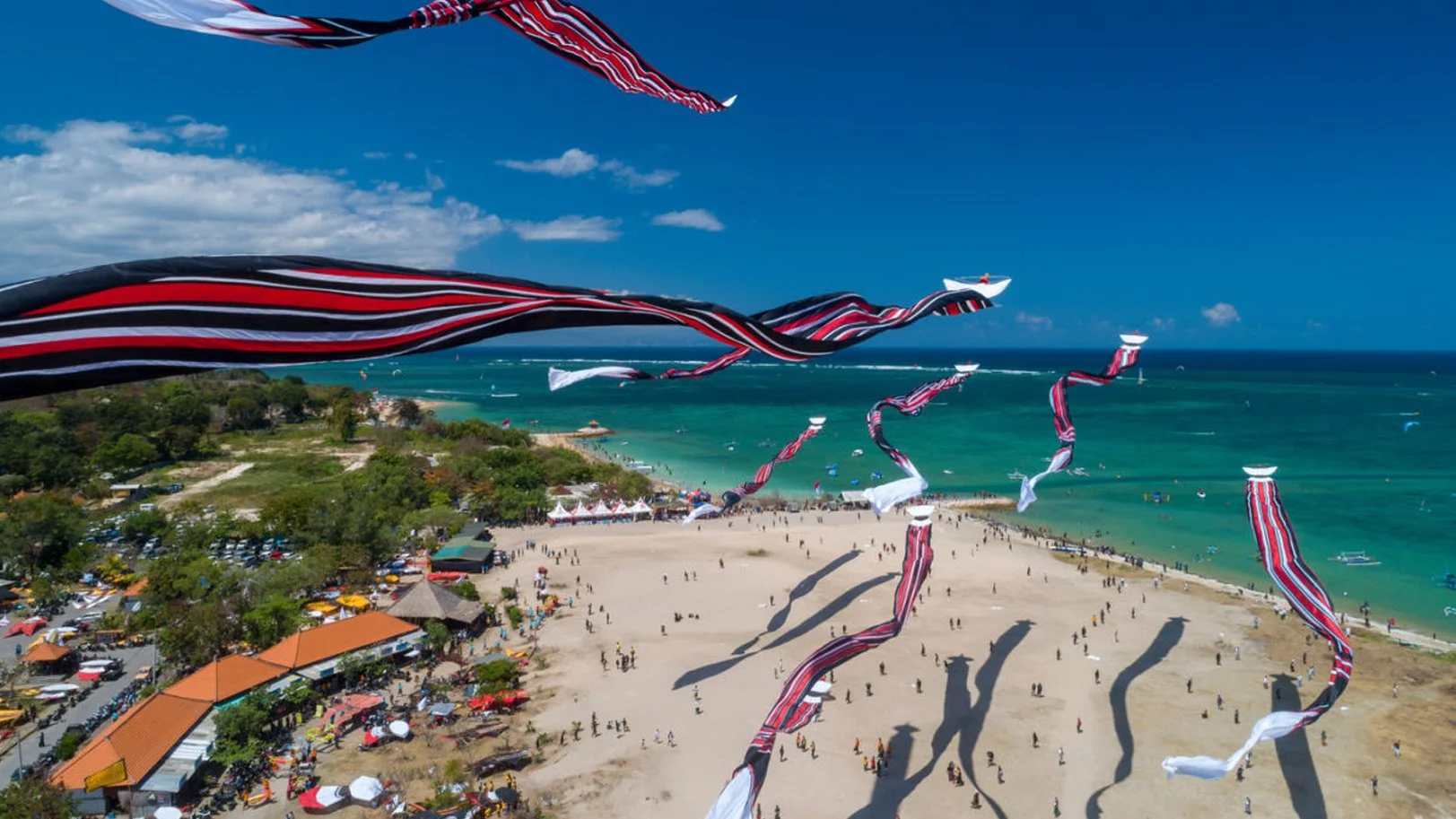
The Bali Kite Festival usually takes place during the windy season between June and August, often around Denpasar or Sanur. Village teams send enormous handmade kites into the sky, from traditional bird and fish forms to contemporary showpieces. Bring sun protection, be patient with parking and do not stand where teams are launching. These are not toy kites. Some look ambitious enough to carry a scooter.
In Tenganan Village, Perang Pandan, also known as Mekare-kare, is a traditional ritual involving thorny pandan leaves and rattan shields. It is tied to courage, purification and devotion to the god Indra. Visitors should watch from appropriate areas and follow local guidance. It is not a tourist performance in the casual sense.
In Jembrana, Makepung buffalo races celebrate farming culture, harvest, village pride and skill. Decorated buffaloes race in pairs across muddy tracks, guided by riders. Wear shoes that can survive the experience.
Food, Books, Film and Music
Ubud Food Festival brings chefs, producers, writers and food lovers together through talks, tastings, demonstrations and culinary discussions. Ubud Writers & Readers Festival offers a slower, more conversational side of Bali, with panels, workshops, book launches and cultural programmes.
Bali’s modern calendar also includes music, film and coastal festivals, from jazz and choir events to Sanur Village Festival, Balinale and Denpasar Festival. These are easier for visitors to join casually, but the usual rule still applies. Check dates, plan transport and never underestimate Bali traffic. It has excellent timing and no mercy.
Where to Gather After the Festival
After a day of ceremonies, exhibitions, talks or music, the best plan is usually the simplest one. Find a table, order something satisfying and let everyone regroup. Why not opt for The Forge Bali? With the Seminyak gastropub setting and comfort food and drinks, no place is better than to unwind here.
Check Our menu before heading over, especially when the group has spent the day walking and nobody can make decisions anymore. If a major match overlaps with festival week, the Sports schedule helps with timing.
