


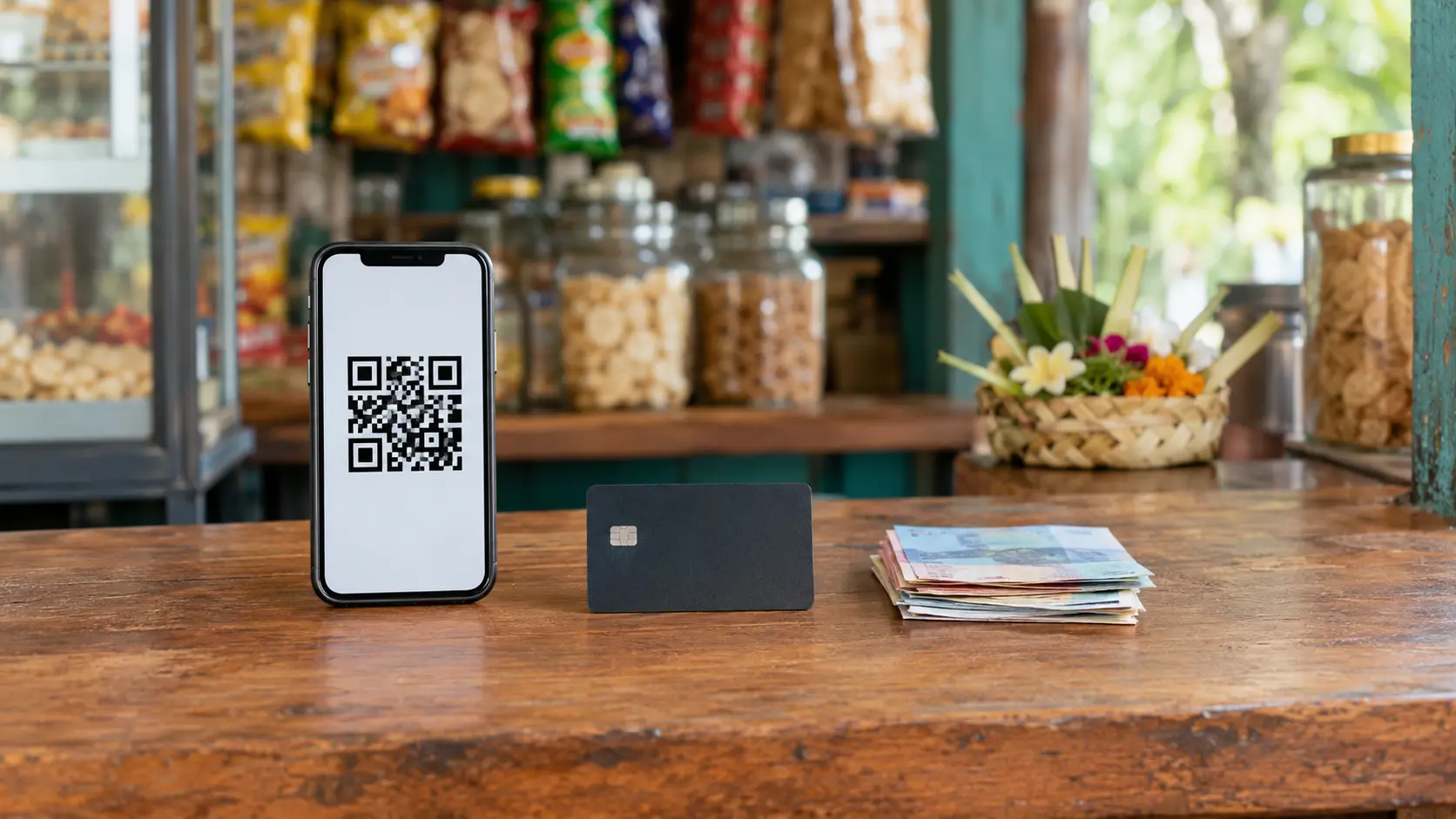
Paying for things in Bali is fairly straightforward once you know when to reach for your wallet and when to reach for your card. Cards will get you far, but they will not get you everywhere. A hotel may take Visa or Mastercard while the warung down the road is much happier seeing rupiah. So how much cash do you need in Bali? The safest approach is a mix of both – carry enough rupiah for everyday spending and save the card for hotels, larger restaurants, tours, and bigger bills.
Do You Need Cash in Bali? (And How Much)
Yes, you should carry cash in Bali. For most travelers, having around IDR 500,000 to IDR 1,500,000 available for daily spending gives enough room for food, transport, markets, tips, and smaller purchases.
There is little reason to carry your entire holiday budget in cash. Larger hotel, restaurant, shopping, and tour bills are generally better suited to a card.
Cash or Card in Bali: The Best Way to Pay by Situation
| Paying for | Cash | Card |
| Warungs | Yes | Rarely |
| Markets | Yes | Rarely |
| Taxis | Yes | Sometimes |
| Parking | Yes | Usually no |
| Temples | Yes | Usually no |
| Minimarkets | Yes | Often |
| Grab/Gojek | Yes | Yes |
| Hotels | Yes | Usually |
| Restaurants | Yes | Common in tourist areas |
| Tour operators | Yes | Often |
Outside Bali’s main tourist centers, cash becomes more important. For taxis, ask about card payment before getting in rather than discovering the answer when the ride ends.
How to Get Rupiah: ATMs and Money Changers
ATMs are widely available. Depending on the machine, single withdrawals are commonly capped around IDR 1 million to IDR 3 million. Local ATM fees vary from no fee to around IDR 100,000, and your home bank may add an overseas withdrawal or currency-conversion charge.
Use ATMs inside established banks, shopping centers, or other secure locations rather than the lonely machine sitting outside a convenience store at midnight. If the machine offers to charge you in your home currency, decline and choose Indonesian rupiah. This is dynamic currency conversion, where the operator sets the exchange rate, and that convenient-looking conversion usually comes with a worse deal. Keep the transaction in rupiah and let your own bank handle the conversion instead.
Licensed money changers are another option, and in Bali you will see plenty of them. The sensible rule is not to be seduced by the biggest number glowing on the board. Check the displayed rate and commission first, then count your rupiah before leaving. Airport counters and hotels are convenient, particularly when you have just landed and cannot be bothered to hunt around, though their rates are often less competitive.
Using a Card in Bali: Fees, E-Wallets and QRIS
Visa and Mastercard are the safest bets for general acceptance. Some businesses add around 2 to 3 percent for card transactions or set a minimum spend. Your card issuer may also charge a foreign transaction fee.
Choose a travel card with broad international acceptance, an EMV chip, sensible ATM charges, and preferably no foreign transaction fee. Notify your bank if required and enable transaction alerts.
QRIS is Indonesia’s standardized QR payment system, while GoPay, OVO, and DANA are common local e-wallets. Foreign visitors can face setup and top-up limitations without an Indonesian SIM or local bank account, so consider these useful extras rather than replacements for cash.
Small Notes and a Backup Plan
A few habits make paying considerably easier:
- Keep IDR 5,000, 10,000, and 20,000 notes for small purchases and tipping.
- Break IDR 100,000 notes at supermarkets or larger businesses.
- Store cash in more than one place.
- Keep a backup card separate from your main wallet.
It is also worth getting familiar with Bali currency before you travel, particularly the note denominations. Those extra zeros become much less alarming after the first few purchases.
And if dinner takes you to The Forge in Seminyak, its current website confirms that the venue accepts several payment methods, so there is no need to arrive carrying a thick stack of rupiah. Make a reservation before heading over, then leave the currency calculations for earlier in the day